The Illusion of Productivity
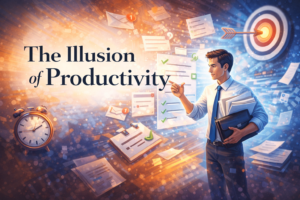
Productivity often feels obvious. Tasks are completed, emails are answered, meetings are attended, and calendars stay full. At the end of the day, there is visible activity and activity feels like progress.
But productivity can be deceptive. Many people feel productive without actually moving closer to meaningful outcomes. This gap between effort and impact is what creates the illusion of productivity.
Why Activity Is Easily Mistaken for Progress
The human brain responds positively to completion. Checking off tasks releases a small
sense of reward. This makes short, visible actions feel satisfying, even when they contribute little to long-term goals.
As a result, people gravitate toward work that is easy to finish rather than work that is im
portant. Inbox zero feels productive. Clearing notifications feels productive. Yet these actions often maintain the system rather than improve it.
The illusion forms when motion replaces direction.
How Productivity Tools Reinforce the Illusion
Modern productivity tools are designed to organize tasks, track activity, and optimize schedules. Used well, they can be helpful. Used without clarity, they amplify busyness.
Lists grow longer. Dashboards become crowded. Metrics measure output without measuring relevance. People become efficient at managing tasks rather than questioning whether the tasks matter.
When tools prioritize quantity over quality, productivity becomes performative instead of purposeful.
The Role of Urgency in False Productivity
Urgency is a powerful driver. Requests labeled “urgent” demand immediate attention. Over time, urgency trains people to react instead of think.
Reactive work feels productive because it is fast and visible. But urgency often reflects someone else’s priorities, not strategic importance. When urgency dominates, important work gets postponed indefinitely.
This creates a cycle where people are constantly busy yet rarely effective.
Why the Illusion Persists
The illusion of productivity persists because it is socially rewarded. Busy people appear valuable. Calm, focused people often appear underutilized.
In many workplaces, outcomes are harder to observe than effort. It is easier to notice responsiveness than impact. As a result, people optimize for visibility rather than results.
This dynamic encourages surface-level productivity and discourages deeper thinking.
The Cost of Believing the Illusion
Believing the illusion has consequences. People invest energy without seeing proportional returns. They feel exhausted but dissatisfied. Progress feels elusive despite constant effort.
Over time, this disconnect erodes motivation. When hard work does not produce meaningful results, frustration grows. Burnout becomes more likely—not because of laziness, but because effort lacks alignment.
True productivity should create momentum, not depletion.
What Real Productivity Looks Like
Real productivity is quieter. It involves fewer tasks but more impact. It prioritizes outcomes over activity and clarity over speed.
Productive work usually includes:
- Clear priorities
- Defined outcomes
- Fewer interruptions
- Intentional decision-making
It may look slower on the surface, but it compounds over time. Results improve because effort is focused where it matters.
How Clarity Breaks the Illusion
Clarity exposes the illusion by forcing better questions:
- What progress actually matters?
- What work can be safely ignored?
- What am I optimizing for?
When these questions are answered, much of what once felt productive loses importance. Tasks drop away. Focus sharpens. Work becomes lighter and more meaningful.
Clarity replaces motion with direction.
Redefining Productivity for Sustainable Work
To escape the illusion, productivity must be redefined. It is not about how much gets done, but about what moves things forward.
This shift requires courage. It means letting go of visible busyness. It means protecting thinking time. It means measuring success by outcomes rather than activity.
When productivity is grounded in clarity, effort finally translates into progress—and the illusion disappears.