When Hard Work Stops Creating Results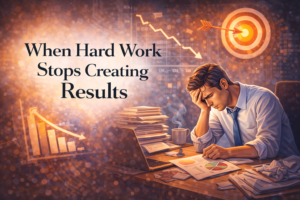
Hard work is widely respected. From early education to professional life, effort is praised as the path to success. When results fall short, the instinctive response is to work harder—longer hours, more intensity, fewer breaks.
But there comes a point where hard work stops producing better results. Beyond that point, effort increases while outcomes stagnate or even decline. This is not a personal failure. It is a predictable consequence of how work and thinking interact.
Why Hard Work Is the Default Response
When progress slows, effort feels like the most controllable variable. You can choose to stay late, push harder, or take on more. These actions feel proactive and responsible. They avoid uncomfortable questions about direction, priorities, or effectiveness.
Hard work also carries moral weight. It signals commitment and resilience. Questioning hard work can feel like questioning character. As a result, many people double down on effort rather than reassess approach.
Unfortunately, effort without alignment has limits.
The Point Where Effort Loses Impact
Hard work stops creating results when it is no longer guided by clarity. Without clear priorities, effort spreads thin. People work on too many things at once, switching constantly between tasks. Energy dissipates.
Cognitive performance also declines under sustained strain. Focus weakens. Judgment deteriorates. Simple tasks take longer. Mistakes increase. The extra effort meant to compensate for slow progress quietly causes it.
At this point, more work does not solve the problem—it becomes part of it.
When Motion Replaces Meaning
One sign that hard work has stopped working is constant motion without clear outcomes. Days feel full, yet meaningful progress is hard to identify. People are busy responding rather than creating.
This often happens when work becomes reactive. Requests, messages, and urgent tasks dictate priorities. Important but non-urgent work is postponed repeatedly. Over time, the gap between effort and impact grows.
Motion feels productive. Meaningful progress requires direction.
The Role of Mental Fatigue
Mental fatigue is a major reason hard work backfires. Sustained effort without recovery drains cognitive resources. Decision-making becomes slower and less accurate. Creativity declines. Motivation erodes.
People may continue working long hours, but the quality of thinking deteriorates. Work completed under fatigue often needs revision later, creating more work instead of less.
Rest is not the opposite of productivity. It is a prerequisite for it.
Why Clarity Restores Effectiveness
Clarity realigns effort with results. When priorities are clear, effort concentrates. Fewer tasks receive attention, but those tasks matter more. Work feels purposeful instead of endless.
Clarity also reduces unnecessary work. It reveals what can be delayed, delegated, or eliminated. This creates space for deeper focus and better thinking—conditions where effort produces value again.
Hard work regains its power when it is directed.
Shifting From Effort to Effectiveness
Escaping the hard-work trap requires shifting the question from “How can I work harder?” to “What would make my work more effective?”
Useful questions include:
- What outcome am I actually trying to achieve?
- Which work creates the most impact?
- What am I doing out of habit rather than intention?
These questions invite clarity. They reduce wasted effort and restore momentum.
Sustainable Results Come From Better Thinking
Sustainable results are not built on endless effort. They are built on clear thinking, focused execution, and intentional recovery. Hard work still matters—but only when it supports the right goals.
When effort is aligned with clarity, work feels lighter even when challenges remain. Results improve not because people push harder, but because they push in the right direction.
Hard work is valuable. Clarity makes it effective.